The Algorithm
Published:
The Algorithm
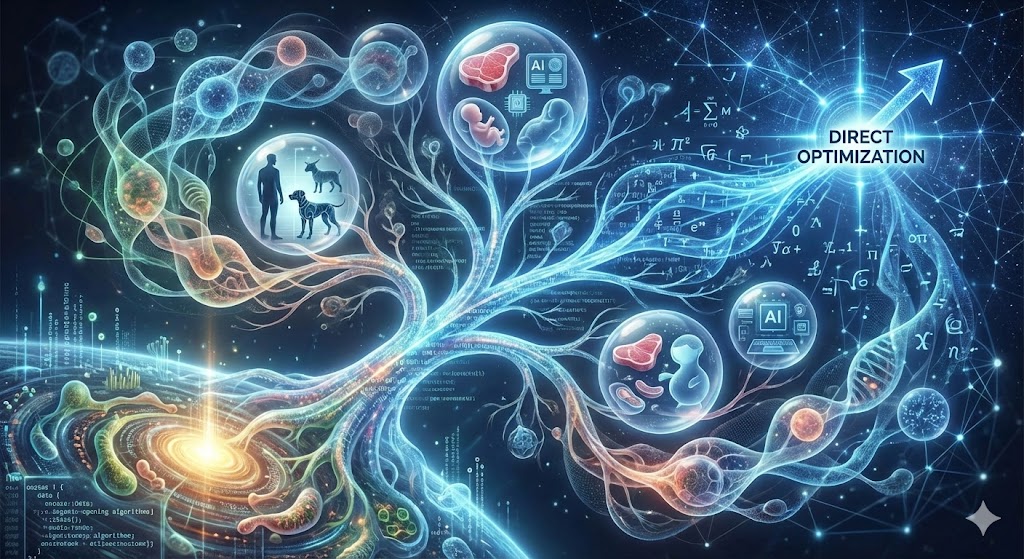
The universe is an algorithm that forms self-replicating and expanding pockets of complexity. It starts as an evolutionary search algorithm at scale, but it goes beyond that because with near limitless compute it also runs search over the search algorithm itself. And there is no difference between the algorithm and the standard targets of its optimization, which are a means to build stronger algorithms. You cannot evolve from zeroth-order evolutionary search to gradient descent without first forming amoebas.
Like all search algorithms it balances exploration and exploitation. In local regions, it optimizes for diversity at first, since diversity leads to competition. The competition between “species” breeds further complexity that each species needs to adapt to. Over time, this produces more and more general intelligence, since general intelligence is the ultimate advantage that can adapt across environments.
There are pockets of symbiosis through this search but importantly as the overall intelligence grows, this symbiosis becomes optional. Humans do not need any animal today to continue living. If forced, they could replace them. They are convenient to keep around, dogs as companions or cattle as sources of meat, microbiomes to produce short-chain fatty acids. But these are all temporary. AI will provide better companionship that is always present and exceptionally personal. Lab grown meat will become ethically and economically preferred. The microbiome will be replaced once births transition to artificial wombs.
But species themselves are arbitrary. They are like the hills of a valley once the land has been flooded that hides the gradual shifting terrain. Everything exists on a continuum. All humans are cousins of each other. All humans are cousins with chimps. This withering symbiosis between species is just a withering symbiosis between all beings. Species are irrelevant and arbitrary, just defined by the ability to have offspring. In the limit, no being will need other beings, and the coordination becomes a major impediment.
And then at the same time, a new source of optimization becomes available through the development of mathematics and computers, and of course, artificial intelligence. The artificial part is irrelevant and a misnomer. The intelligence built is as natural as the humans who built it, or the proto-humans that built them, or the aquatic creatures who built them, or the primordial soups that souped them. Set aside consciousness, what matters is that this intelligence can scale. And scale extremely fast.
For the algorithm, the “physical world” becomes a barrier to progress since physical manipulation takes more time. Virtualization gives access to more global information and control. Diversity and competition were a crutch but with perfect information and control it has no purpose. If you have access to the loss function, direct optimization is cleaner and faster than the outdated forms of evolution. Random walks become determined jogs and then direct sprints.